Constitution
approved by the General Assembly of ASSITEJ in Malmø,
Sweden, May 24, 2011.
Preamble
Since the theatrical art is a universal expression of mankind
and possesses the influence and power to link large groups of the
world's people and considering the role that theatre can play in
arts education of young generations, an autonomous international
organization has been formed which bears the name of the
International Association of Theatre for Children and Young People.
The Association shall be known by the acronym ASSITEJ (Association
International du Theatre pour l´Enfance et la Jeunesse).
ASSITEJ recognizes the right of all children and young people to
enrichment through the arts and their own cultural traditions,
especially theatre culture. Theatre respects its young audiences by
presenting their hopes, dreams, and fears; it develops and deepens
experience, intelligence, emotion, and imagination; it inspires
ethical choices; it increases awareness of social relationships; it
encourages self-esteem, tolerance, confidence, and the free
expression of opinions. Above all, it helps future generations find
their place and voice in society. To this end, ASSITEJ endorses
Article 31 of the1989 United Nations´ Convention of the Rights of
the Child that affirms the right of children to leisure time and
the enjoyment of arts and cultural activities. It shares common
values with UNESCO's Cultural Policy, calling for the rights of
children and young people to cultural participation and activity.
It holds with the belief of the 2005 UNESCO Convention about
Cultural Diversity, that children and young people must be allowed
a cultural identity and to be visible everywhere in society.
ASSITEJ is an advocate for the promotion of theatre for young
audiences in principle and practice. It calls on all national and
international organizations that recognize the potential of
children and young people and their capacity to contribute to the
development of society to recognize and support this
constitution.
Article 1 - Mission
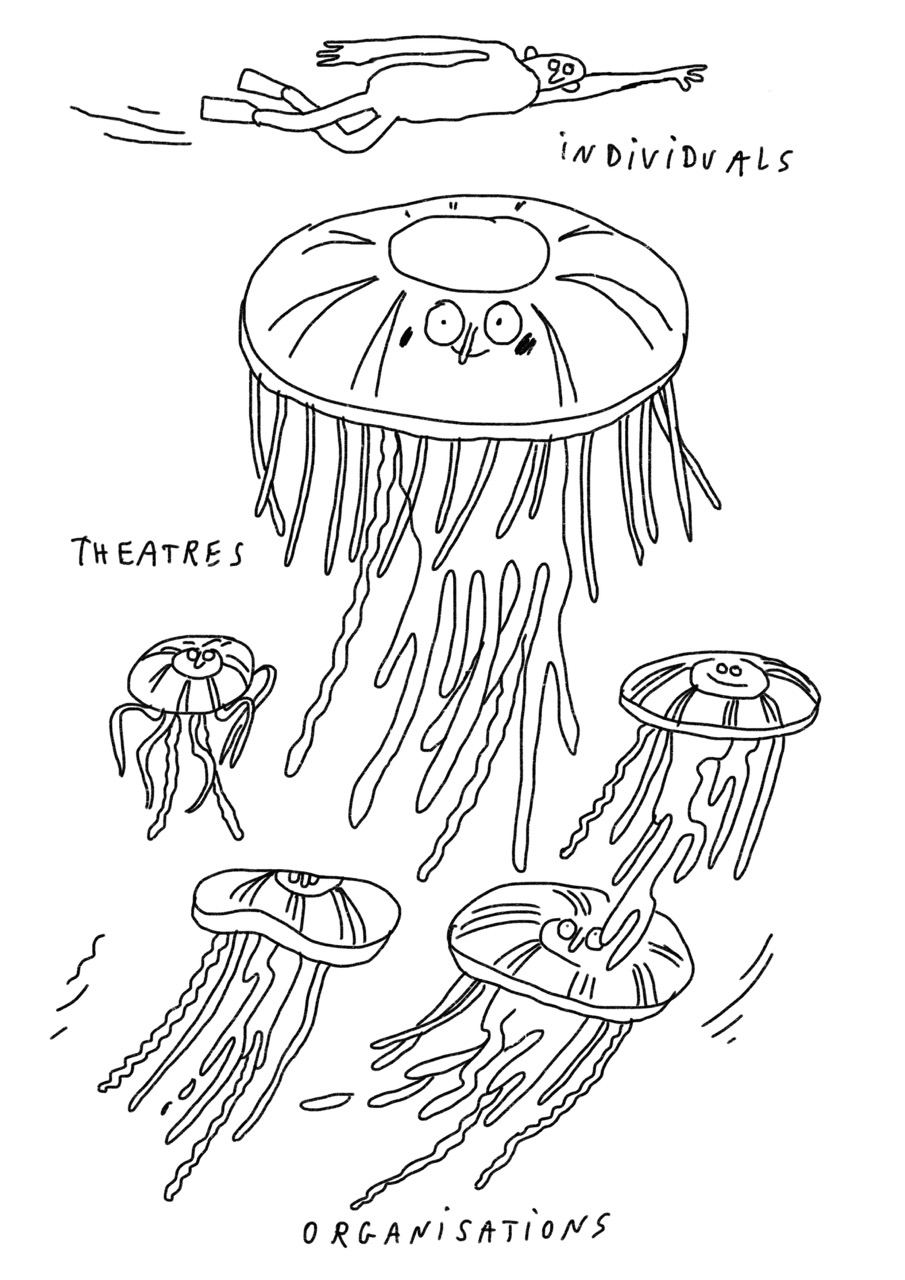
1.1. ASSITEJ proposes to unite theatres, organizations and
individuals throughout the world dedicated to theatre for children
and young people.
1.2. ASSITEJ is dedicated to artistic, cultural political and
educational efforts and no decision, action or statement of the
Association shall be based on nationality, political conviction,
cultural identity, ethnicity, or religion.
1.3 ASSITEJ promotes international exchange of knowledge and
practice in theatre in order to increase creative co-operation and
to deepen mutual understanding between all persons involved in the
performing arts for young audiences.
Article 2 - Aims
Recognizing that children and young people make up a large part
of the world's population and that they represent the future, the
aims of the Association are:
2.1 To work for the rights of children and young people to
artistic experiences especially designed and created for them.
2.2 To work for the recognition and acknowledgement of theatre
for children and young people.
2.3 To work for improvement of the conditions of theatre for
children and young people all over the world.
2.4 To improve the common knowledge of theatre for children and
young people worldwide, thus drawing the attention of international
and national authorities to the importance of taking children and
young people and the artistic work created for them seriously.
2.5 To give people working with theatre for children and young
people the opportunity to learn about the work of colleagues from
other countries and cultures, thus enabling them to enrich theatre
for children and young people in their own country.
2.6 To help to form in all countries, ASSITEJ centres and
networks which function in accordance with the mission,
constitution and policies of the Association. These centres and
networks shall unite all theatres, organizations, and persons
interested in theatre for children and young people.
2.7 To help to establish international artistic networks to
explore different aspects of artistic work for children and young
people, to increase the artistic competence of artists and to
benefit them.
Article 3 - Means
The means of achieving these aims will be:
3.1. Organization, promotion and support of national, regional,
and international programmes, congresses, conferences, festivals,
study tours, exhibitions, and other activities.
3.2. Promotion and support of exchange of experiences between
artists from all countries.
3.3. Encouragement of circulation and exchange of plays, texts,
and other literature pertaining to theatre for children and young
people.
3.4. Collection of material and documentation on theatre for
children and young people.
3.5. Promotion of theatre for children and young people through
all media.
3.6. Co-operation with other international organizations with
related interests.
3.7. Introduction and support of proposals made by centres and
networks in order to advance the work of theatre for children and
young people to appropriate national and international authorities
and agencies.
Article 4 - Members
ASSITEJ is created to facilitate the development of theatre for
children and young people at the highest artistic level and no
theatre, organization or individual can be refused admittance to
membership of ASSITEJ on the basis of age, gender, ethnicity,
disability or ability, sexual orientation, cultural identity,
national origin, or political or religious conviction.
4.1 Members of the Association
are:
1. national centres representative
of theatre for children and young people in their own
countries;
2. professional, international
networks of theatres, organisations and persons who share a common
artistic need or interest that serves the growth of theatre for
children and young people;
3. individual members (theatre
companies, organisations, or persons) dedicated to theatre for
children and young people, who are not able to participate in other
forms of ASSITEJ membership.
4.2 CATEGORIES OF MEMBERSHIP:
1. Full membership
National centres and networks
2. Corresponding membership
Those national centres and networks
that are unable to meet the full criteria for membership, but can
meet less stringent criteria as defined in Article 4.3.
3. Non-voting membership
Individual members (theatre
companies, organizations or persons) dedicated to theatre for
children and young people, who are not able to participate in other
forms of ASSITEJ membership.
4.3 DEFINITIONS OF MEMBERS:
4.3.1 National Centres:
1. National centres are networks of
theatre companies, organisations and persons working in that
country in the field of theatre for children and young people.
2. Categories of membership within
national centres are:
2.1. Professional theatre companies
or artists performing for children and young people.
2.2. Non-professional theatre
companies or artists performing for children and young people.
2.3. Organizations, institutions,
associations or persons actively engaged in the work of theatre for
children and young people.
2.4. Supporting organizations,
institutions, associations, or persons interested in theatre for
children and young people.
3. Criteria for full or
corresponding membership:
3.1 To qualify for full membership
in the Association, a national centre must be a network comprising
of at least three (3) professional members (2.1), or five (5)
members with at least two (2) professional members (2.1) and three
(3) non-professional members (2.2).
3.2 To qualify for corresponding
membership, a national centre must be a network of theatre
companies, organisations, and persons which does not achieve the
above criteria.
4.3.2 Professional Networks
1. Professional networks are formal,
international networks of theatre companies, organisations, and/or
persons working in and supporting the field of theatre for children
and young people.
2. Professional networks can be
formed on the basis of common interests or needs related to the
work of theatre for children and young people.
3. Criteria for membership:
3.1 To qualify for full membership
in the Association, a professional network should be a global
network which includes members from at least seven (7) countries
from two (2) or more continents.
3.2 Those professional networks
which do not meet the above criteria, but include members from a
minimum of five (5) countries, may apply for corresponding
membership.
4.3.3 Individual members:
1. Individual members are theatre
companies, organizations or persons dedicated to theatre for young
audiences, who are not able to participate in other forms of
ASSITEJ membership.
2. Individual members are non-voting
members.
Article 5 - Rights and
Obligations
5.1 Full members
have the right to make proposals at constitutional meetings, to
be elected to the Executive Committee, and to vote according to the
rules detailed in Article 9.
5.2 Corresponding members
have the right to make proposals at constitutional meetings and
to vote according to the rules detailed in Article 9. Corresponding
members do not have the right to be elected to the Executive
Committee.
5.3 Non-voting members
have the right to participate in the work of the Association,
including giving proposals at constitutional meetings, but do not
have the right to vote according to the rules detailed in Article
9. Additionally, non-voting members do not have the right to be
elected to the Executive Committee.
5.4 All members, full, corresponding, and non-voting, have the
following obligations:
- to work to achieve the aims defined by the Association,
- to maintain its statutes,
- to act upon the decisions made by the Association,
- to pay their membership fees,
- to keep the Secretary General informed of their activities on a
regular basis,
- to appoint a correspondent,
- to provide a permanent address,
- and to communicate to their members the information sent from
the Secretary General's office.
5.5 All full and corresponding members must use the acronym
"ASSITEJ" either in the name of the centre or network or in the
description in the subtitle.
Article 6 - Application, Resignation, Suspension,
Expulsion
6.1. Written applications for membership shall be addressed to
the Secretary General. These applications will be considered,
approved, or denied by the Executive Committee. In the case of a
denial by the Executive Committee, the applicant may appeal to the
next General Assembly.
6.2. Any member that wishes to resign from the Association
should inform the Secretary General in writing. The resignation
will take effect from 1st January in the following year.
6.3. The Executive Committee may decide, by a majority of
two-thirds, on the rejection, suspension, or expulsion of any
member whose work conflicts with the fundamental aims of this
Association, or who has failed several times in one of the
obligations mentioned in Article 6.4. Any centre which has been
rejected, suspended, or expelled loses the right to use the acronym
"ASSITEJ".
6.4. Any rejected, suspended, or expelled member may appeal to
the next General Assembly.
Article 7 - Finances
7.1. This Association is financed from membership fees, as well
as from subsidies or grants accepted by the Executive
Committee.
7.2. The fiscal period of this Association runs from one General
Assembly to the next.
7.3. Membership fees, which are determined by the General
Assembly, are due on 1st January of each year and must be sent to
the Treasurer. Members more than six (6) months in arrears lose the
right to vote in the General Assembly.
Article 8 - Structure
The governing body of this Association consists of:
1. The General Assembly
2. The Executive Committee
Article 9 - Functions of the General Assembly
9.1 The General Assembly consists of delegations of all full and
corresponding members.
9.2 A delegation from a centre or network with full membership
has three (3) votes. A delegation from a centre or network with
corresponding membership has one (1) vote.
9.3 Voting by proxy is permitted, and the proxy must be given in
writing. A centre or network wishing to transfer its proxy must do
so in writing. A delegation from a national centre can hold proxy
for only one other national centre. A national centre with full
membership can hold proxy for any full or corresponding member. A
national centre with corresponding membership can hold proxy only
for a national centre with corresponding membership. A network with
full membership can hold proxy only for another network of full or
corresponding membership.
9.4 Non-voting members are invited to participate in the work of
the General Assembly. These members are encouraged to find ways to
formally associate with others to become part of the voting
membership of ASSITEJ International.
9.5. The Association shall meet in General Assembly at the World
Congress at least once in every three calendar years, with the
formal announcement of this meeting made at least six months in
advance by the Secretary General upon instruction of the President.
The General Assembly will decide on the location of the next
General Assembly and World Congress, but if it should be unable to
make a decision on this matter, or if a change of location should
prove necessary, this decision will be left to the Executive
Committee.
9.6. The Association may meet between two World Congresses.
Members may propose an already existing event of international or
regional significance for selection as an "Assitej International
Meeting". These event/s will be selected by the General Assembly at
the World Congress.
9.7. A special meeting of the General Assembly may be called by
the Secretary General three months in advance on the written and
justified request of two-thirds of the members or at the discretion
of the Executive Committee in the case of an emergency or
extraordinary circumstance.
9.8. The General Assembly has final control over the
Constitution, and decides on any changes or amendments. Any member
wishing to amend the Constitution must give notice in writing to
the Secretary General at least three (3) months before the date of
the meeting of the General Assembly. Any decision to amend the
Constitution shall require a two-thirds majority.
9.9. The General Assembly establishes the broad outlines of the
Association's policy.
9.10. The General Assembly receives for approval the report of
the activities and the financial report, which are submitted by the
Executive Committee.
9.11. The President of this Association is by right President of
the General Assembly. In the event of his or her absence, he or she
will be replaced by a Vice-President, selected by vote of the
Executive Committee, or, in the absence of all the Vice-Presidents,
by a member of the Executive Committee elected for this purpose by
the General Assembly.
9.12. All decisions, unless otherwise stated, are taken by
simple majority vote. In the case of a tie, the President will cast
the deciding vote. If two centres apply to host the next Congress,
the host shall be the centre that receives the most votes. If more
than two centres apply for hosting, and neither receives a
majority, a second vote shall be taken between the two leading
candidates, and the host shall be the centre that receives the most
votes.
9.13. The General Assembly determines the membership fees and
other charges to be levied on the members of the Association.
9.14. A meeting of the General Assembly can only be held if the
delegates of at least one-third (1/3) of the full and corresponding
members state in writing to the Secretary General their
determination to be present and to participate, either in person or
by proxy. This notification of attendance must be sent to the
Secretary General three (3) months in advance of the meeting.
9.15 Quorum: The General Assembly can only make decisions if
one-third (1/3) of the members participate either in person or by
proxy.
9.16 Elections
9.16.1 Elections for the Executive
Committee of the Association are held at a meeting of the General
Assembly at least once in every three (3) calendar years.
9.16.2 The General Assembly shall
elect the President and Secretary General from those standing for
the Executive Committee, in this order: the President is elected
first and presides over the election of the Secretary General and
representatives to the Executive Committee. Candidacies for the
offices of the President and Secretary General should be sent in
writing to the Secretary General, three months before the date of
the General Assembly in order to circulate nominations to the
members of ASSITEJ.
If no centre or network has
presented candidates for these offices, the Executive Committee at
its last meeting before the General Assembly shall recommend a
candidate for each of the offices and inform all members of this
recommendation.
9.16.3 The General Assembly shall
elect the members of the Executive Committee as representatives of
centres or networks with full membership. A centre or network with
full membership may have only one representative on the Executive
Committee. Where a centre and a network nominate candidates from
the same country, the candidate of the national centre takes
preference and may stand for election. Each full member, on its own
behalf, should send to the Secretary General, in writing, the name
of its candidate three months before the date of the meeting of the
General Assembly in order to circulate nominations to the members
of ASSITEJ.
9.16.4 From amongst the members of
the Executive Committee, the General Assembly shall elect the
Vice-Presidents and Treasurer, who shall be nominated in a meeting
of the new Executive Committee. They shall be elected in their
personal capacity.
9.16.5 The officers and members of
the Executive Committee shall be chosen to represent as fairly as
possible the interests of the organization and the diversity of all
the centres and networks, taking into account such factors as
geography, ethnic origin, gender, aesthetics and cultural identity.
They should also reflect strengths that serve the concerns and
priorities of the working plan for the elected term.
9.17. The General Assembly, on the recommendation of the
Executive Committee, can give the titles of Honorary President and
Honorary Member for exceptional service to the Association. Both
shall have a consultative voice, but no right to vote, and they
cannot represent their country.
9.18. On the recommendation of the Executive Committee, the
General Assembly shall appoint an accredited financial officer to
conduct the audit of the accounts.
9.19. The agenda, with its enclosures, and candidates for the
President, the Secretary General and the Executive Committee,
should be sent from the General Secretariat to all centres no later
than two (2) months in advance of the General Assembly.
9.20. Only those items which are set down on the agenda may be
voted upon in the General Assembly.
Article 10 - Functions of the Executive
Committee
10.1. The Executive Committee is composed of a maximum of
fifteen (15) members having the right to vote, including the
President, three (3) Vice-Presidents, the Secretary General and the
Treasurer.
10.2. In the event of the death or resignation of a member of
the Executive Committee, the Executive Committee shall authorize
the centre or network which nominated the member to appoint a
deputy for the remaining period of the term of office. The
exceptions are: in the case of the President, where the replacement
shall be from amongst the Vice-Presidents; and in the case of one
of the Vice Presidents, where the Executive Committee is authorized
either to leave the office vacant or, if it judges it necessary, to
elect a replacement from amongst its own members. In the case of
the death or resignation of the Secretary General, the Executive
Committee will appoint a suitable person to the office in an acting
capacity, until the next General Assembly.
10.3. The Executive Committee has the right to co-opt persons as
members of the Executive Committee. The Executive Committee also
has the right to appoint Counsellors for the period of its mandate,
who may attend, without voting rights, meetings of the Executive
Committee during their time in office.
10.4. Any member who cannot attend a meeting of the Executive
Committee can be replaced only by a permanent deputy nominated by
his or her centre for the duration of his or her term of office.
The Secretary General must be notified of the deputy's name as soon
as possible after the General Assembly.
10.5. A meeting of the Executive Committee may be held only if
at least half (1/2) of the members express to the Secretary General
their determination to be present and participate, either in person
or represented by a deputy. The presence of half (1/2) of the
members shall constitute a quorum.
10.6. The Executive Committee will meet at least once each
calendar year; the Committee will decide by majority vote if it is
necessary to hold additional meetings, and will choose the places
and dates of such meetings. The committee must be notified three
(3) months in advance. Meetings will be called by the Secretary
General at the request of the President.
10.7. The Executive Committee may decide upon urgent matters by
correspondence if it proves impossible to hold a special meeting.
In this case the Secretary General, by agreement with the
President, shall send to each member of the Executive Committee a
questionnaire, to which each member will reply in writing.
Decisions will be made by a two-thirds majority vote. The decisions
will come before the Executive Committee at their next meeting for
ratification. The replies will be placed in the records of the
Association where they will be available for examination by members
of the General Assembly.
10.8. Each member of the Executive Committee possesses one vote,
which he or she may use in person, unless delegated to his or her
permanent deputy.
10.9. The President of the Association is also Chairperson of
the meetings of the Executive Committee. In the event of the
President's absence, he or she will be replaced by a
Vice-President, selected by vote of the Executive Committee, or if
all the Vice-Presidents are absent, by a member elected for this
purpose by the Executive Committee to chair the meeting.
10.10. All motions are carried by a simple majority vote, except
decisions taken by correspondence or regarding Article 6.3.
10.11. The Chairperson of the meeting has the right to vote as a
member of the committee. If a majority decision cannot be
established by this means, the Chairperson may cast a second,
deciding vote.
10.12. The Executive Committee will submit a working plan of
activities to the General Assembly. It manages the affairs of the
Association between the meetings of the General Assembly and
carries out the decisions of the General Assembly. The Executive
Committee will remain in office for the period between one General
Assembly and the next, which will be three years or thereabouts, at
which time its members shall be eligible for re-election.
10.13. The Executive Committee will accept or reject new
applications for membership made to the Secretary General. A
rejection may be appealed by the applicant at the next General
Assembly.
10.14. The budget is administered by the Executive Committee
according to a working plan established by the General
Assembly.
10.15. The Executive Committee entrusts to the Treasurer the
administration of funds, the
preparation of the budget, and the accounts. The accounts of the
Association must be audited before the presentation to the General
Assembly (Article 9.18).
10.16. The Executive Committee may take initiative in matters
not anticipated by the General Assembly, provided that these
matters are in keeping with the mission and aims of this
Association, and provided that the Executive Committee takes the
first opportunity to report on these matters to the members.
Article 11 - Functions of the Officers
The Officers of this Association are as follows:
-The President
-Three Vice-Presidents
-The Secretary General
-The Treasurer.
11.1. The Officers are charged with specific functions in
carrying out the Association's program and submitting reports to
the Executive Committee.
11.2. In case of any urgent matters not foreseen by the
Executive Committee, the Officers are given the right to act at
their discretion and will take the first opportunity to report on
these matters to the Executive Committee.
Article 12 - Languages
12.1. Working languages at the General Assembly will be the
language of the host country, English, and at least one other
language as determined by the Executive Committee according to the
needs of the meeting. On the occasion of international events, the
working languages will be the language of the host country and
English, with the option of one more language according to
need.
When the host country is English-speaking, it must provide at
least two other languages for the General Assembly. For other
international events, at least one other language must be provided,
if so determined by the Executive Committee, according to the needs
of the event.
12.2 The working language of the Association for written
communication will be English.
Article 13 - Duration
13.1. This Association is created for an unlimited period.
13.2. This Association shall cease to function when, for any
reason, three-fourths (3/4) of the members, on the basis of their
number of votes, shall express in writing to the Secretary General
the desire to dissolve the Association. In this event, the
Executive Committee shall be authorized to declare the Association
dissolved, and any funds remaining in the Association's accounts
will be given to international organizations pursuing similar
aims.
Article 14 - Constitutional amendments
All amendments or changes to the constitution shall come into
force at the moment of their approval by a General Assembly.
Latest amendments adopted by the General Assembly in Copenhagen,
May 2011.
Definitions, etc.:
General Assembly (GA) consists of attending delegations from
centres and networks at a World Congress - Art. 8 & 9
Secretary General (officer) elected directly by General Assembly
- Art. 9.13
President (officer) elected directly by General Assembly - Art.
9.13
Executive Committee (EC) elected directly by General Assembly -
Art. 9.14 & Art.10
Treasurer (officer) elected by GA on the recommendation of EC,
among members of EC - Art. 9.15
3 Vice-presidents (officers) elected by GA on the recommendation
of EC, among members of EC - Art. 9.15
Co-opted (full) member of EC, appointed by EC - Art. 10.3
Counsellor appointed by EC - Art. 10.3
Deputy (for an EC-member) nominated by the EC-member's Centre or
Network - Art. 10.4
Honorary President appointed by GA on the recommendation of EC -
Art. 9.16
Honorary Member appointed by GA on the recommendation of EC -
Art. 9.16
Auditor: An accredited financial officer elected by GA on the
recommendation of EC - Art. 9.17 & Art. 10.15
International Events are, for example, international festivals,
conferences, seminars, workshops, forums, and other activities
which take place officially in the name of ASSITEJ, apart from the
General Assembly - Art. 12
An ASSITEJ World Congress and Performing Arts Festival is a
meeting of the General Assembly taking place at least once every
three years, which includes both the business of the association
and artistic exchange - Art. 9
An ASSITEJ International Meeting is an international event where
the Executive Committee is present and where all members of ASSITEJ
are invited to attend. It is primarily an artistic meeting of the
organisation and occurs between World Congresses - Art. 9.6
DOWNLOAD